


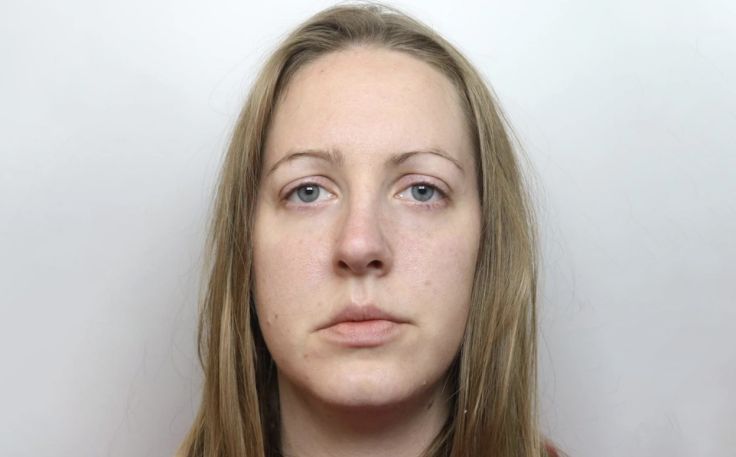
Netflix’s latest true-crime deep dive, The Investigation of Lucy Letby, is reigniting one of the most disturbing and divisive cases in recent memory. Lucy Letby, a former neonatal nurse in the U.K., was convicted in August 2023 of murdering seven babies and attempting to murder six others at the Countess of Chester Hospital. She received a whole-life sentence. A July 2024 retrial added another conviction for the attempted murder of a baby known publicly as “Baby K.” But now, the documentary is prompting viewers to ask a controversial question: was every piece of evidence as airtight as it seemed?
One of the film’s most unsettling moments doesn’t happen in a courtroom—it unfolds inside Letby’s family home. Police bodycam footage shows officers searching her bedroom, turning private space into public evidence. Her parents later called the footage a “complete invasion of privacy.” Regardless of where viewers stand on Letby’s guilt, the emotional fallout is impossible to ignore. The case has devastated families, divided the public, and fueled a wave of online debate that refuses to fade.
At the center of the controversy is a handwritten note found during a police search. Jurors were told Letby wrote, “I killed them on purpose because I’m not good enough,” a line widely viewed as a confession. But the documentary highlights that the same note also included phrases like “I haven’t done anything wrong” and other fragmented, emotional statements. The film suggests the note may not be a straightforward admission of guilt but rather a complex snapshot of distress—raising questions about how such evidence is interpreted in court.
Prosecutors also relied heavily on staff schedules showing Letby on duty during multiple infant collapses and deaths. To jurors, the pattern appeared damning. Critics featured in the documentary argue that correlation doesn’t necessarily prove intent, suggesting that staffing shortages, shift patterns, and hospital pressures may have played a role. The film also revisits medical evidence involving unexplained insulin levels—presented at trial as crucial proof but now challenged by some experts.
An independent panel organized by Mark McDonald, including Dr. Shoo Lee—whose research was cited during the trial—raises concerns about potential misdiagnoses and systemic failures. Dr. Lee expresses fear that “a young woman could be imprisoned for offenses she did not commit.” Meanwhile, hospital consultant Dr. Gibbs defends the original conclusions and describes the online harassment faced by medical staff. The result is a case that feels less like a closed chapter and more like an ongoing cultural battle.
The documentary stops short of declaring Letby innocent. Instead, it examines how certainty can harden into narrative—and how doubt can linger long after a verdict. In a story involving vulnerable infants and devastating loss, emotions run high. For American true-crime audiences, the series offers something both gripping and uncomfortable: a reminder that even the most shocking convictions can spark questions that refuse to disappear.