


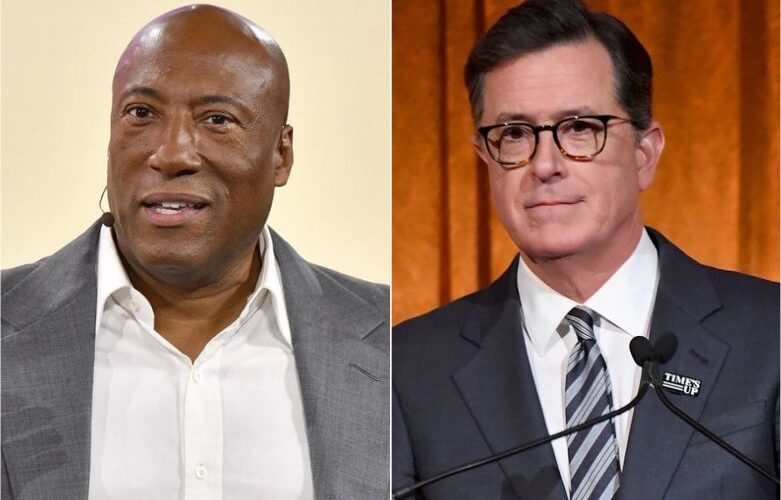
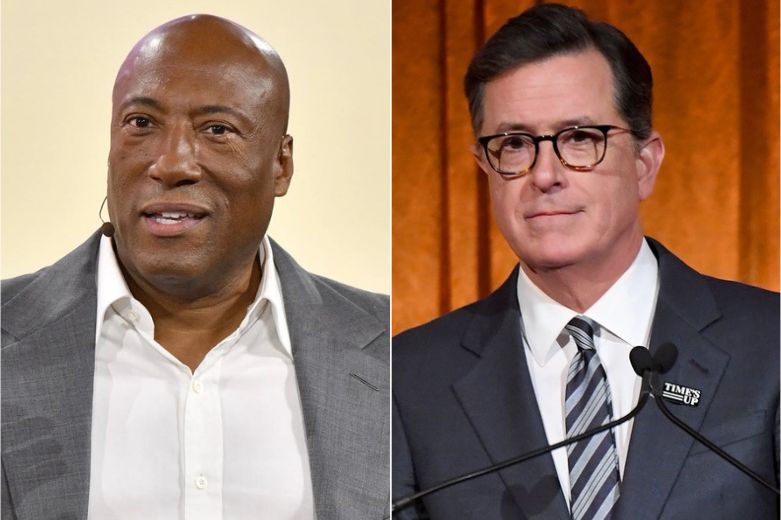
Byron Allen is not backing down after his new CBS late-night slot was hit with brutal ratings headlines.
Allen, 65, responded after reports described ‘Comics Unleashed’ as a “ratings disaster” following Stephen Colbert’s exit from ‘The Late Show.’ The numbers looked harsh. Colbert’s final episode brought in 6.7 million viewers, while Allen’s show drew 995,000 viewers the next night in the same 11:35 p.m. slot.
Then the drop got worse.
On June 1, when rival late-night hosts returned with new episodes after Colbert’s exit, ‘Comics Unleashed’ reportedly fell to 628,000 viewers.
That marked an 85% decline from Colbert’s finale.
Byron Allen Says CBS Still Won
Allen did not sound shaken in an interview with the Los Angeles Times.
Instead, he argued that the comparison to Colbert’s farewell numbers was unfair because Colbert was coming off what he called a “post-cancellation victory lap.”
Allen claimed his show should be compared to Colbert’s regular ratings before the final surge. Even then, Nielsen data cited by LateNighter showed ‘The Late Show’ averaged more than double the viewers of ‘Comics Unleashed’ last May. Allen also argued that his show “bested the competition” in key TV markets, pointing to a chart he published after his CBS debut.
Still, the broader late-night picture remains rough. ‘The Tonight Show,’ ‘Jimmy Kimmel Live!’ and ‘Late Night With Seth Meyers’ have continued to outperform in the same late-night space.
For Allen, though, the ratings fight may not be the whole point. “CBS has won big-time because they have zero production costs and now they are saving $55 million a year,” he told the Los Angeles Times.
CBS Is Betting On A Cheaper Late-Night Model
Allen’s CBS deal works differently from a traditional late-night show.
Through a time-buy agreement, he leases the 11:35 p.m. slot from CBS for $15 million. That lets him sell the show directly to advertisers and keep the profit. He also leases the following 12:35 a.m. slot, though he declined to say how much he paid for that airtime.
CBS has also defended the arrangement as a major financial win.
“We’re proud to partner with Byron Allen on a new business and programming model for late night that proactively addresses a network daypart that was cost-prohibitive to continue,” CBS said in a statement.
The network said the model changed an hour that was losing roughly $40 million annually into $15 million in profit, calling it a “$55 million swing.” That explains why CBS may tolerate weaker ratings. The network is no longer spending big money to produce the hour.
Critics Are Still Not Sold
The money argument has not stopped the criticism.
Allen’s panel show, which uses a laugh track and a low-cost format, has been mocked for feeling cheaper and safer than Colbert’s political late-night show. John Oliver also took aim at the replacement on ‘Last Week Tonight,’ adding more attention to the awkward transition.
The bigger issue is what CBS wants late night to be after Colbert. One version is about influence, cultural commentary, and political comedy. The other is about lower risk and better margins.
Allen is clearly pitching the second version. “I like to say I’m a 65-year-old overnight success,” he said, adding that he is building what he hopes will become “the world’s biggest media company.” That confidence may help him weather the jokes. It does not erase the optics.
Colbert left with millions watching. Allen arrived with a cheaper model, a steep ratings drop, and a blunt defense: CBS is making money now.
For viewers, that may not sound like a late-night win. For CBS, it may be enough.