


Content Advisory: This article discusses Marilyn Monroe’s death, mental health, and a probable intentional overdose. Reader discretion is advised.
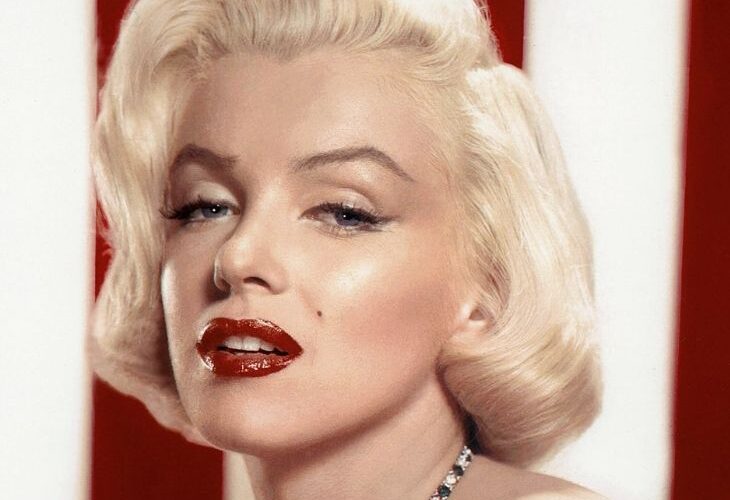
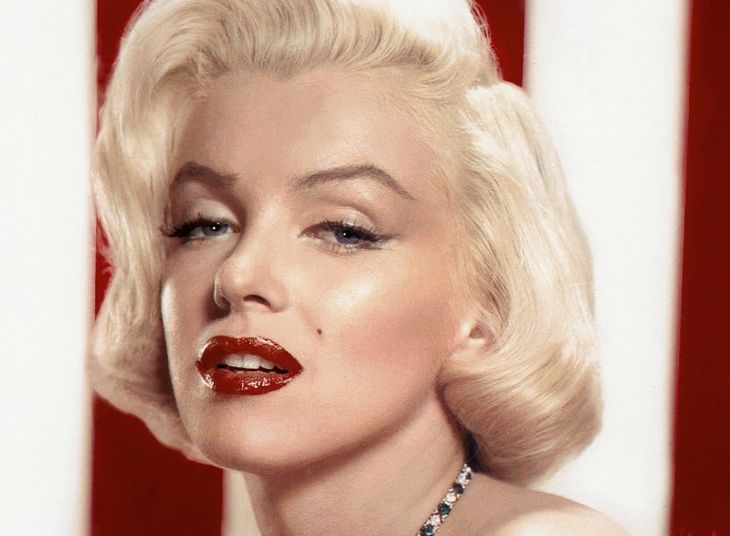
Marilyn Monroe’s final full interview is being released more than 60 years after her death, and it shows a woman still trying to explain herself beyond the myth.
Monroe, one of Hollywood’s most famous stars, died on Aug. 4, 1962, at age 36. Her death was ruled a probable intentional overdose from acute barbiturate poisoning. Two days before her death, ‘Life’ published her final interview with editor Richard Meryman.
Now, ahead of what would have been Monroe’s 100th birthday on June 1, the full unedited interview is being released in ‘Marilyn: The Lost Photographs, The Last Interview.’ The book, from Simon & Schuster imprint Weldon Owen, arrives May 12 and includes unpublished ‘Life’ photographs.
Marilyn Monroe Looked Back On A Difficult Childhood
Monroe spoke openly about the childhood that shaped her.
Long before she became the face of Hollywood glamour, she grew up in Los Angeles as the daughter of a single mother, Gladys Baker, who worked as a film negative cutter. When Monroe was 8, her mother was diagnosed with schizophrenia and committed to a psychiatric hospital. Monroe then became a ward of the state.
In her final interview, she said movies became an escape early.
“I decided I wanted to be an actress when I was five,” Monroe told Meryman. “Some of my foster parents used to send me to the movies to get me out of the house, and there I’d sit all day and way into the night, up in front, a little kid all alone, and I loved it.”
She also reflected on how young she was when adult life began. Monroe married her first husband, factory worker James Dougherty, when she was 16.
“When I was 16, a kid, I was a housewife,” she said. “Happiness wasn’t anything I ever took for granted.”
Monroe Said People Did Not Really Know Her
Monroe’s comments suggest a woman aware of how much the public image had overtaken the real person.
She never had children, but spoke warmly about the stepchildren she shared with her third husband, playwright Arthur Miller.
She recalled once seeing her stepson Bobby with a magazine article about her.
“I just said, ‘Bobby, anything you want to know about me, come and ask me. But don’t get it secondhand from these kind of things,’” Monroe said. “My stepchildren are my best friends.”
That desire to be understood runs through the interview. Despite being adored by millions, Monroe told Meryman, “You know, most people really don’t know me.”
Her Final Interview Revisits Fame, Kennedy And Hollywood
Monroe also discussed some of the defining moments of her career.
She recalled her famous 1962 birthday performance for President John F. Kennedy at Madison Square Garden, saying the room went quiet before she sang.
“When I got to the microphone, I just took one breath and then suddenly I thought, here goes!” she said. “I thought, I’ll sing this song if it’s the last thing I ever do.”
She also remembered meeting Robert F. Kennedy afterward and introducing President Kennedy to her former father-in-law, Isidore Miller, because she thought the moment would mean so much to him.
Monroe spoke frankly about her treatment in Hollywood too. While making the 1953 comedy ‘Gentlemen Prefer Blondes’ with Jane Russell, she said Russell earned $200,000 while she made $500 a week.
She also said she struggled to get a dressing room.
“They always kept saying, ‘Remember, you’re not a star,’” Monroe recalled. “I said, ‘Well, whatever I am, I am the blonde!’”
Monroe’s final film, ‘The Misfits,’ was released in 1961. It remains one of the last major pieces of a career that became larger than almost any single performance.
Her final interview now offers something different from the usual Hollywood image. Not the poster. Not the rumor. Not the legend frozen in time.
It is Monroe, in her own words, saying what people still struggle to hear: they never really knew her.