



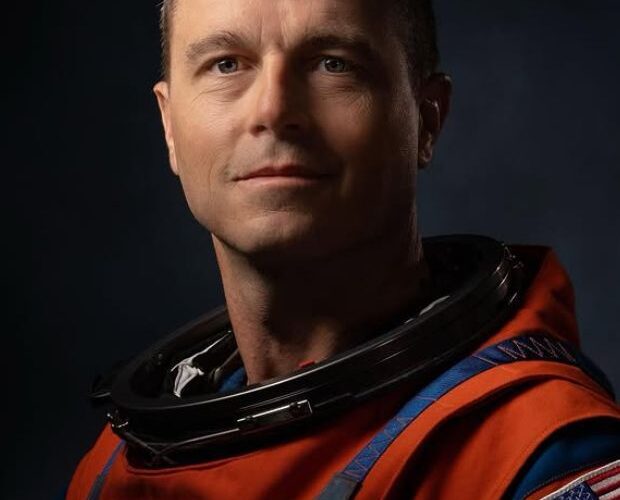
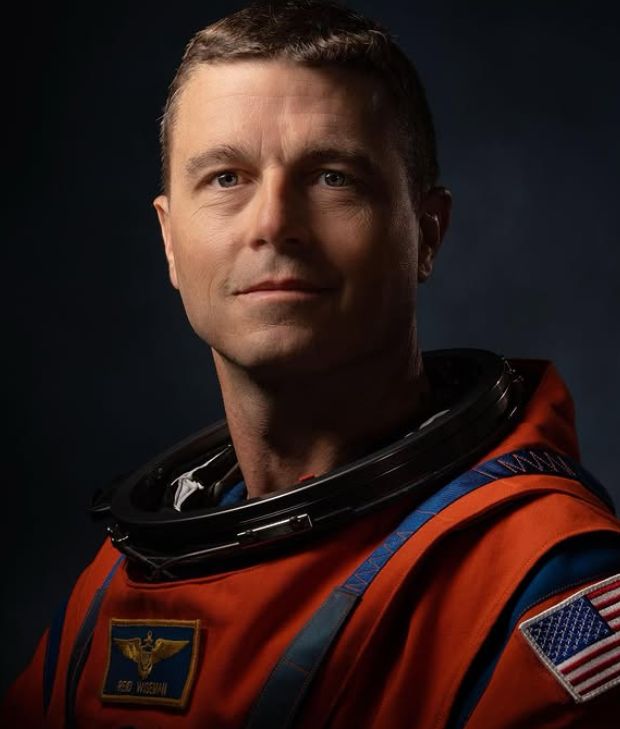
Reid Wiseman went all the way to the moon and still found a way to bring his late wife with him.
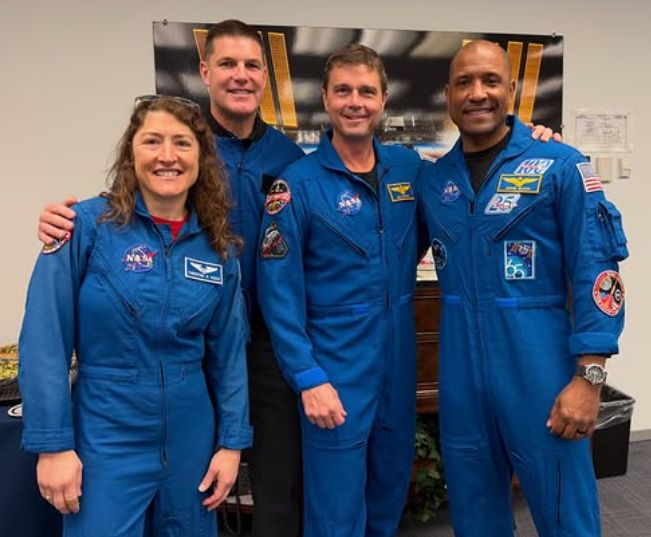
During Artemis II’s historic lunar flyby on April 6, the crew paused for one of the mission’s most emotional moments and proposed naming a bright lunar crater ‘Carroll’ after commander Reid Wiseman’s late wife, Carroll Wiseman, who died in 2020. Mission specialist Jeremy Hansen told mission control, “We lost a loved one. Her name was Carroll, the spouse of Reid, the mother of Katie and Ellie,” before adding, “It’s a bright spot on the moon, and we would like to call it Carroll.” The crew then pulled into a group hug as mission control responded, “Integrity and Carroll Crater, loud and clear, thank you.”
Wiseman, 50, has spoken openly about nearly stepping away from his astronaut career when Carroll was diagnosed with cancer. In a 2025 interview, he recalled wanting to move the family back to Virginia, but said Carroll refused, telling him not to give up the job he had worked for his whole life. Carroll, a pediatric nurse, died at 46 in 2020.
How Carroll’s Memory Stayed With Him All the Way to the Moon
After Carroll’s death, Wiseman said his daughters, Ellie and Katie, kept his purpose in focus by sending him pictures of the moon. He later said it felt like he was “carrying a legacy of her along,” and added, “I honor her every single day, every single minute.” That family push mattered more than ever once NASA named him commander of Artemis II in March 2023.
On NASA’s ‘Curious Universe’ podcast, Wiseman admitted he worried at first about how his daughters would react to the danger of the mission. Instead, they were fully supportive. He said they turned it into “an extremely positive thing,” and shared that Ellie even baked moon-shaped cupcakes for him. He also said launch day was hardest on families watching from Earth, not the astronauts with their checklist in front of them.
A Record-Breaking Flight With a Deeply Personal Twist
Artemis II launched on April 1 and became the farthest-flying human mission in history on April 6, reaching about 252,756 miles from Earth and passing Apollo 13’s record.
During the flyby, Wiseman was overwhelmed by the view, saying, “There’s no adjectives. I’m going to need to invent new ones.” B
ut for many people watching, the crater tribute was the real gut punch. It turned a major NASA milestone into something far more human: a widower, a father, and a commander carrying love and loss into history.