
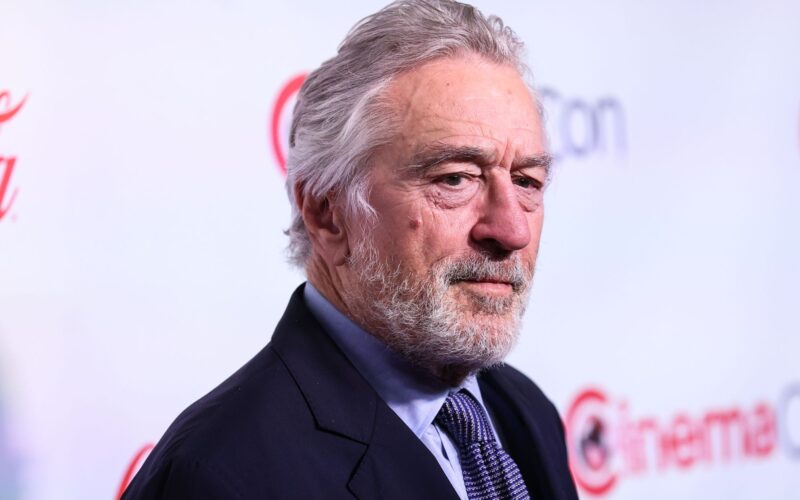
Hollywood has never fully stayed out of politics, but the latest round of ‘No Kings’ protests made one thing very clear: some of its biggest names are no longer content with symbolic statements or carefully worded posts.
On March 28, Robert De Niro, Jane Fonda, Bruce Springsteen, Joan Baez, and others showed up in person as the nationwide demonstrations entered their third major wave. That matters because this was not just another celebrity photo-op. It was a very public show of alignment between star power, protest politics, and a growing sense that the country is in a deeper fight over democracy, power, and public fear.
That is the larger question hanging over these marches.
When celebrities step this directly into protest movements, what does it actually mean for Hollywood and for America? The answer is messy, but it is getting harder to ignore. In a media culture where stars are often told to stay marketable and avoid alienating audiences, these figures are doing the opposite. They are choosing sides in public, and they are doing it at a moment when the political temperature is already running hot.
The ‘No Kings’ protests turned celebrity activism into something more visible
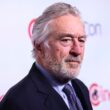
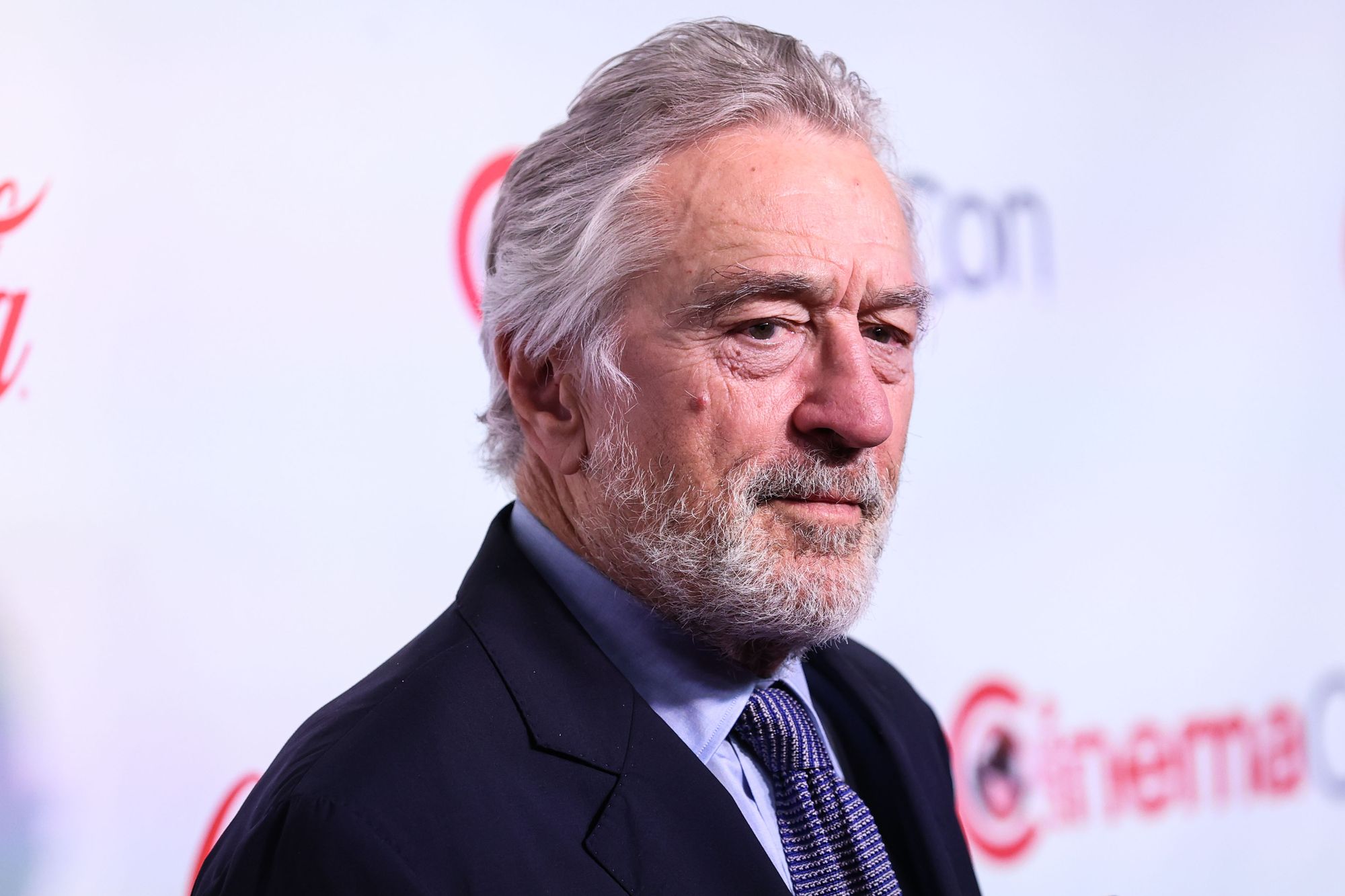
The March 28 protests were massive, with around 3,000 marches scheduled nationwide. In New York, De Niro helped lead the procession alongside Rev. Al Sharpton and Attorney General Letitia James, turning one of the day’s most-watched events into a striking collision of celebrity, politics, and public anger. During his speech, De Niro called the demonstrations “a great rallying cry, and hugely successful as millions of us have answered the call.”
He did not stop there. “It’s time to say no to kings,” he said. “It’s time to say no to Donald Trump. We’ve had enough.” It was not polished awards-show activism or vague civic language. It was blunt, personal, and confrontational, exactly the kind of celebrity speech that used to feel rare outside campaign season.
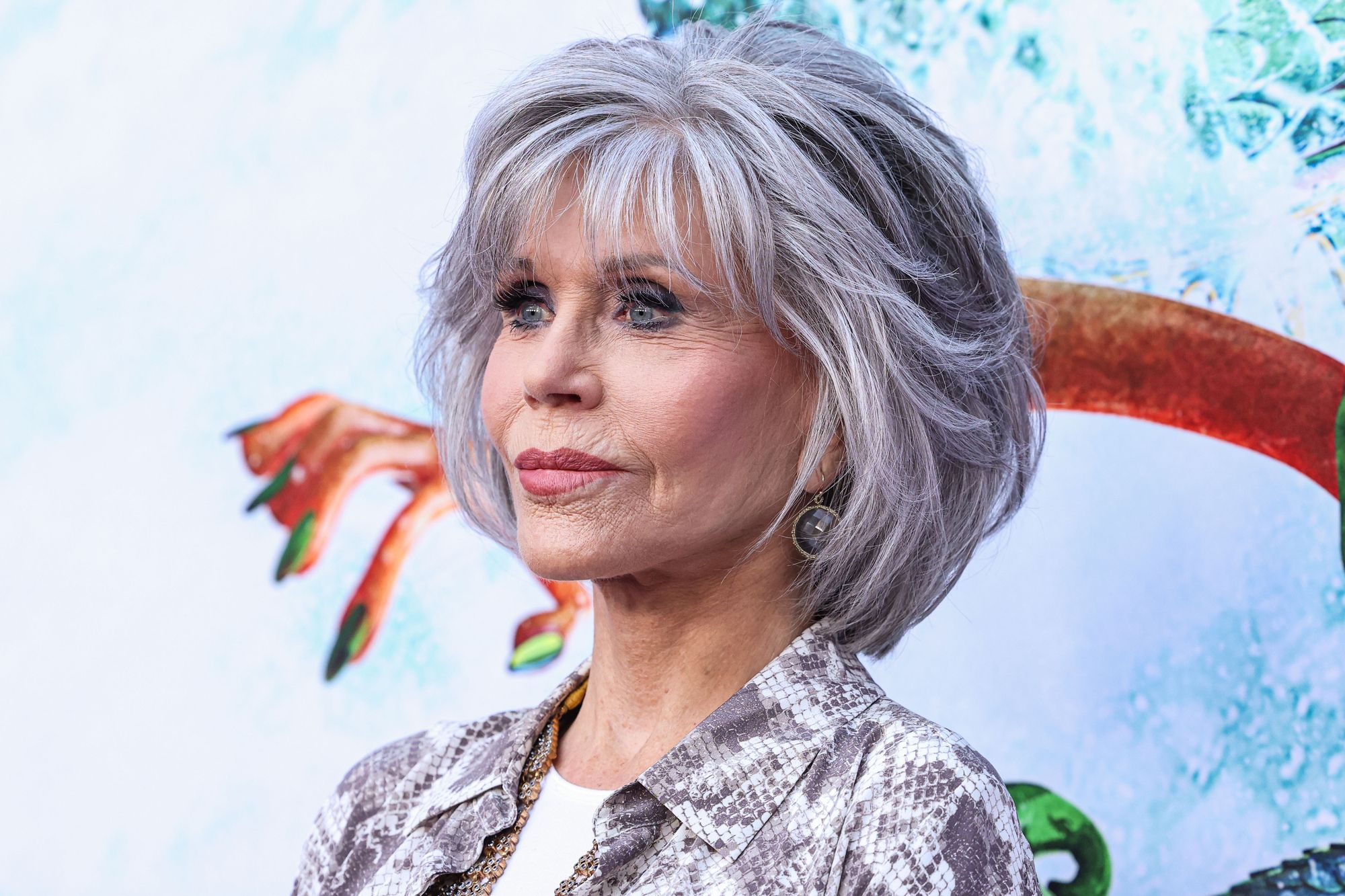
Elsewhere, the protests carried the same energy. In Washington, D.C., outside the Kennedy Center, Joan Baez and Maggie Rogers performed at ‘Artists United for Our Freedom,’ an event hosted by Fonda’s Committee for the First Amendment. Billy Porter and Rupi Kaur also appeared, while Fonda spent the day pushing the rallies across television appearances as protests spread through cities including San Diego, San Francisco, Philadelphia, Atlanta, and Boston. Even London saw its own ‘No Kings’ gathering.
In St. Paul, Bruce Springsteen joined Sen. Bernie Sanders, Rep. Ilhan Omar, and Gov. Tim Walz at one of the day’s biggest rallies. He performed ‘Streets of Minneapolis’ and spoke in stark terms about fear and resistance. “They picked the wrong city,” he said, praising the solidarity of Minneapolis and framing it as proof that “this is still America.”
What this means for Hollywood and the country
This is where the story gets bigger than one day of protests. For Hollywood, it shows that political speech is no longer limited to prestige interviews, carefully managed social posts, or red carpet talking points. More celebrities are treating activism as part of their public identity, even when it risks backlash, audience division, or industry discomfort. That shift says a lot about where celebrity culture is right now. The old idea that stars should stay neutral to stay profitable feels less stable when the issues themselves feel more immediate and harder to sidestep.
For America, the meaning is more complicated. Celebrity involvement can amplify a protest, attract cameras, and help push a movement further into mainstream attention. It can also sharpen the backlash, with critics dismissing activism as elite performance or media spectacle. Both things can be true at once. But what happened on March 28 suggests that public figures still have real power to focus attention, frame the stakes, and make a protest feel larger than its route map.
That matters in a political climate where attention is one of the most valuable currencies there is.
The ‘No Kings’ protests were already designed to be a rejection of authoritarian language, economic strain, and state violence. When celebrities joined in so visibly, they did not change the core message. They magnified it. Whether that helps build lasting political momentum is the harder question. But in the short term, it sends a clear signal: Hollywood is not simply reacting to American politics anymore. Parts of it are trying to shape the public mood in real time.
And in a country this divided, that is never just background noise.
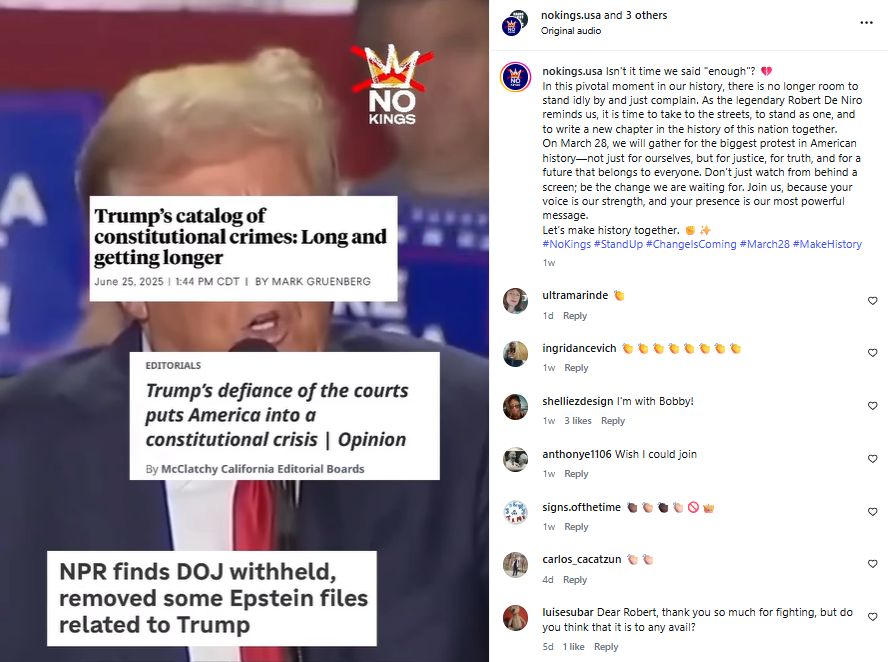
You can watch Robert De Niro speak on the protests on No Kings in America’s Official Instagram Page here.