


Bad Bunny didn’t just perform at Super Bowl LX—he detonated it. The Puerto Rican megastar delivered a halftime spectacle that instantly set social media on fire, with fans calling it one of the most “historic” moments the NFL stage has ever seen. From his early days bagging groceries in Puerto Rico to becoming a Grammy-winning global force, Benito Antonio Martínez Ocasio proved just how far he’s come, commanding the field with jaw-dropping visuals, relentless energy, and pure star power.
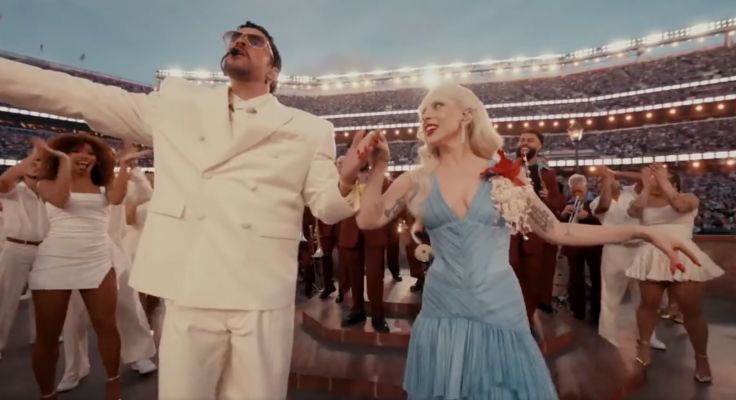
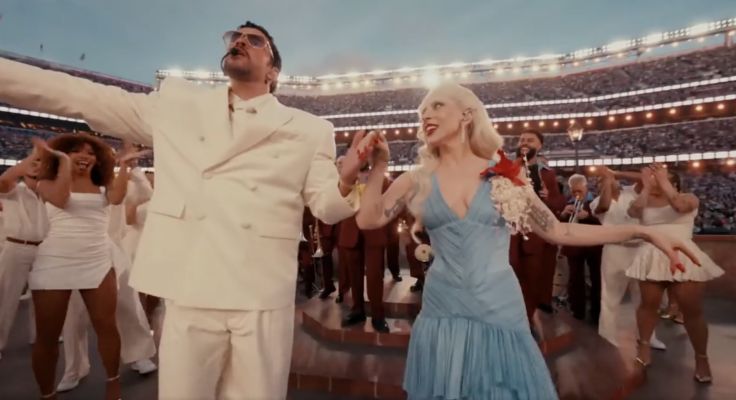
But the real shocker? The surprise entrances that no one saw coming. Just when the crowd thought the show couldn’t get bigger, Lady Gaga and Ricky Martin stormed the stage, sending the stadium—and the internet—into a frenzy. Within minutes, clips of the trio’s powerhouse collaboration were everywhere, racking up millions of views as fans scrambled to process what they had just witnessed.
Fresh off his Grammy wins for Album of the Year for DeBÍ TiRAR MáS FOToS and Best Música Urbana Album, Bad Bunny stepped into Levi’s Stadium on February 8, 2026, with sky-high expectations—and somehow blew past them. Dressed in a sleek all-white look that screamed effortless cool, he powered through a hit-packed medley that included Tití Me Preguntó, MONACO, Yo Perreo Sola, Safaera, and more. The choreography, the staging, the swagger—it all felt massive, cinematic, and unapologetically him.
Lady Gaga, who famously headlined the 2017 halftime show, stunned in a bold blue ensemble as she joined forces with Bad Bunny and Ricky Martin for a moment that felt like a generational crossover. And Martin made it clear he sees this as bigger than music. In a recent interview, he praised Bad Bunny for staying true to his roots, applauding him for winning at the highest level without watering down his Puerto Rican identity.
Days before the game, Bad Bunny teased that he had major surprises planned, hinting that his family, friends, and the global Latino community would be represented on that stage. He wasn’t kidding. The performance became more than just a halftime show—it was a cultural statement. With Spanish-language anthems blasting across one of the most-watched broadcasts in the world, hashtags celebrating Puerto Rican pride dominated online chatter. For millions watching, it wasn’t just entertainment. It was a moment.