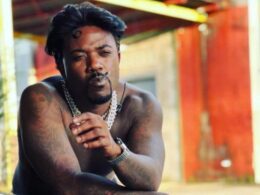




The sudden death of John Forté has reopened one of hip-hop’s most complex and bittersweet stories. The Grammy-nominated rapper and producer, best known for his work with the Fugees, was found dead at his home in Chilmark on Martha’s Vineyard on January 12, 2026. He was 50 years old.
A neighbor discovered Forté unresponsive inside the residence on Monday afternoon. Authorities have said there were no immediate signs of foul play, and the Massachusetts State Medical Examiner is now working to determine the cause of death. Still, the unexpected nature of his passing has sent shockwaves through the music world and reignited interest in the dramatic rise, fall, and redemption that defined his life.
Nearly three decades after The Score turned the Fugees into global superstars, Forté’s story remains both cautionary and inspiring. His death has prompted fans to revisit the events that abruptly halted his momentum in the early 2000s and reshaped the rest of his career.
Born and raised in Brooklyn, Forté showed exceptional musical talent from an early age. He trained as a classical violinist, performed at the Brooklyn Academy of Music, and earned a scholarship to Phillips Exeter Academy. As a teenager, his interests shifted toward hip-hop, where he began producing music and working alongside influential figures like Gang Starr and DJ Premier.
By the mid-1990s, Forté was juggling roles as an A&R executive at Rawkus Records while developing his own sound. His breakthrough came in 1996 after Lauryn Hill introduced him to the Fugees. Wyclef Jean invited him to appear on Cowboys from The Score, an album that went on to sell more than 22 million copies worldwide and win the Grammy for Best Rap Album.
Following that success, Forté contributed to Wyclef’s solo projects and released his own debut album, Poly Sci, in 1998. But the album failed to gain commercial traction, and his label dropped him soon after. Forté later described that period as deeply destabilizing, marking the beginning of a sharp downturn.
In July 2000, his career was derailed completely when he was arrested at Newark International Airport on federal drug charges involving liquid cocaine. Convicted of possession with intent to distribute and conspiracy, Forté was sentenced to a mandatory 14 years in prison. He served time at FCI Loretto in Pennsylvania, where he studied law, taught himself guitar, and slowly rebuilt his relationship with music.
In 2008, Forté’s sentence was commuted by President George W. Bush after a high-profile advocacy effort led by musicians and public figures, including Carly Simon and former Senator Orrin Hatch. He was released later that year and returned to New York determined to rebuild his life on his own terms.
Forté resumed making music independently, collaborated across genres, and composed for film and television. He wrote the Brooklyn Nets’ theme song in 2012 and later settled part-time on Martha’s Vineyard, where he met photographer Lara Fuller. The couple married in 2017 and had two children. His later work, including the 2021 album Vessels, Angels & Ancestors, focused on recovery, justice, and reflection.
Police confirmed they responded to Forté’s home shortly after 2:25 p.m. on January 12 and pronounced him dead at the scene. While no foul play is suspected, officials have described the case as an unattended death pending further medical examination. Reports indicate Forté had been hospitalized about a year earlier following a severe seizure.
In the months before his death, Forté remained creatively active, scoring HBO’s Eyes on the Prize documentary and developing a film about his journey from incarceration to redemption. Tributes poured in from fans and fellow artists, with Wyclef Jean summing up the collective grief in a brief message: “This one hurts.”
John Forté leaves behind a legacy defined not just by what he lost, but by what he fought to reclaim. His life stands as a reminder that even the most devastating setbacks do not have to be the final word.