


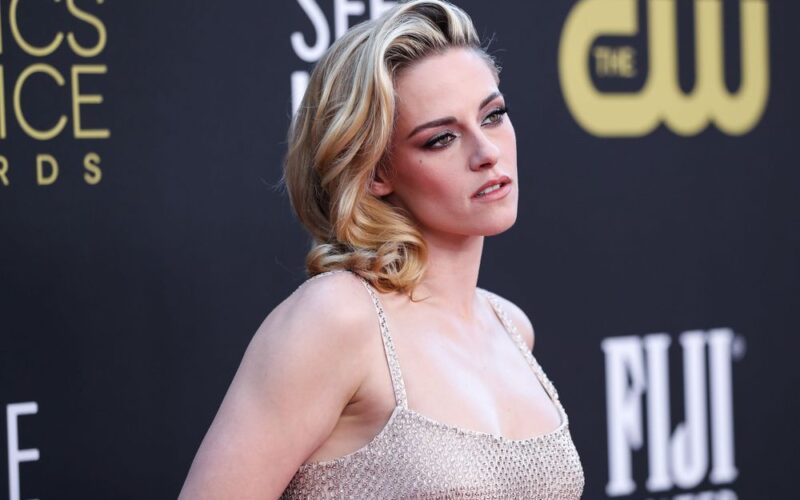
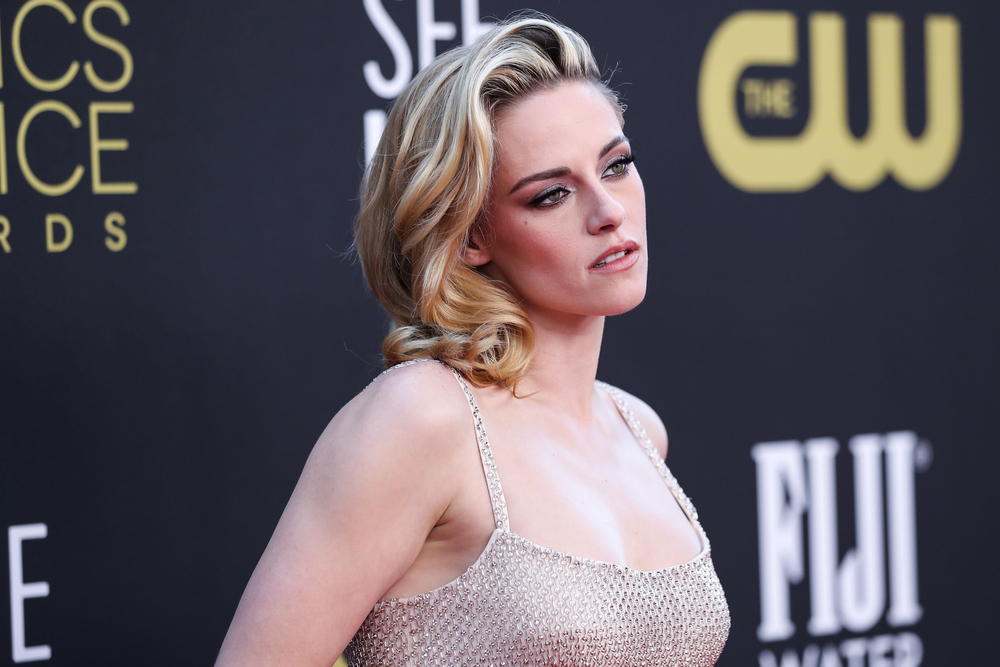
Kristen Stewart is openly questioning whether her future as a filmmaker belongs in the United States, revealing that she feels increasingly unable to work freely under the current political climate. After more than 20 years in Hollywood, the Twilight star says she’s now seriously considering shifting much of her creative life to Europe.
In interviews published in New York and London between December 2025 and January 2026, Stewart admitted she’s “probably not” going to live in the U.S. much longer. The reason, she explained, is a growing sense that artistic freedom in America has become too restricted—particularly for smaller, personal projects.
Stewart pointed directly to President Donald Trump’s proposed “America-first” film policies as a major factor behind her frustration. Among them is a potential 100 percent tariff on films produced outside the U.S., a move she believes has injected instability and fear into the creative process. According to Stewart, the uncertainty alone has made it nearly impossible for independent filmmakers to operate comfortably.
Her recent directorial debut, The Chronology of Water, was filmed in Latvia—a decision she says wasn’t optional. Stewart explained that making the film in the United States simply wouldn’t have been possible given the current system. The project, first announced at the Cannes Film Festival in 2018 and later confirmed as a Latvia-based production in 2024, represented what she described as a necessary “radical detachment” from the U.S. industry.
Stewart emphasized that she’s still finding her footing as a director and needs the freedom to make small, experimental films without excessive barriers. She compared her current phase to making a “student film,” something she feels the American system no longer supports. While she stressed she doesn’t plan to abandon American audiences entirely, she said creating films abroad and later releasing them in the U.S. feels like the only viable path forward.
Her criticism of Trump is far from new. Stewart has long had a contentious history with him, dating back to 2012 when Trump, then a reality TV star, publicly commented on her personal life during her breakup with Robert Pattinson. Stewart later described his fixation as strange and unsettling.
Trump first floated the idea of tariffs on foreign-made films in May 2025, doubling down in September by proposing a full 100 percent levy. On Truth Social, he claimed the U.S. film industry had been “pillaged” by other countries and blamed California leadership for weakening domestic production. Despite the rhetoric, no formal policy has yet been enacted, and the White House has not clarified how such tariffs would be enforced.
Industry leaders and officials have warned that even the threat of tariffs could cause lasting damage. California Governor Gavin Newsom’s office sharply criticized the proposal, saying it would inflict serious harm on the film industry. Analysts have echoed those concerns, noting that uncertainty alone can inflate costs and disrupt a sector that relies heavily on international collaboration. According to Reuters, the U.S. film industry posted a $15.3 billion trade surplus in 2023, underscoring how interconnected global filmmaking has become.
For Stewart, the issue isn’t political theater—it’s survival as an artist. As she weighs her next move, Europe appears increasingly attractive as a place where she can create without fear, pressure, or restrictions she believes now define filmmaking in America.